
From Emerson to Sheldrake: The Eternal Spirit That Binds Humanity
Why is This Concept of Over-Soul Important?
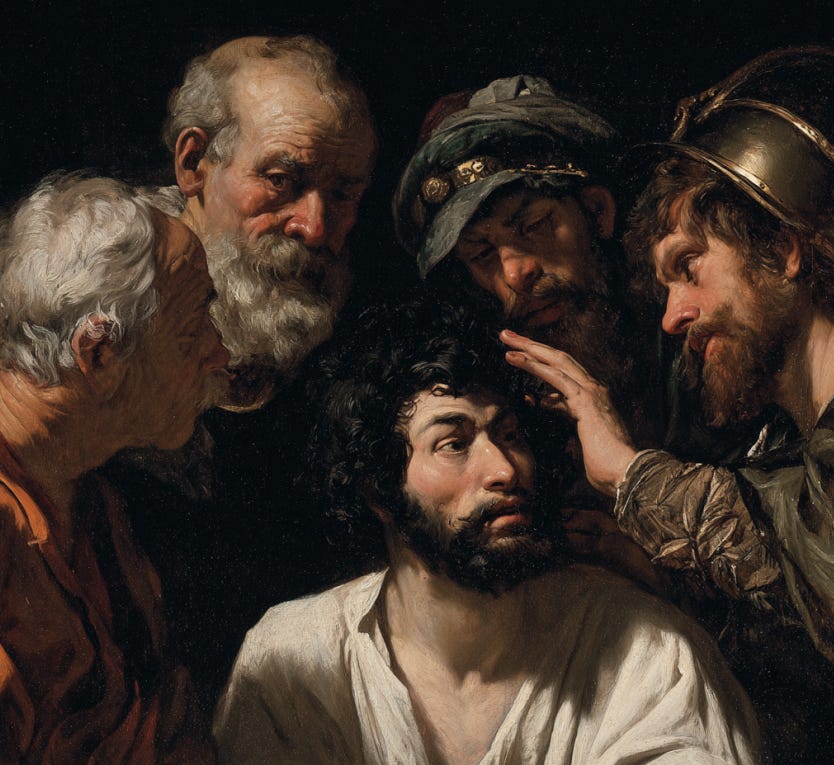
Why have I spent so much time on this subject of Over-Soul, Collective Unconscious, the Soul of the World, and Swedenborg’s Spiritual World of Eternity? It is because I believe that these concepts are fundamentally true. As I have written earlier, humans can never know the Truth. But some of us can have glimpses. Jung had them. Swedenborg was a true exception. He was able to pass into the spiritual world and directly learn from the entities that are out there.
It is reassuring to me that these concepts were not invented by some lunatic. People have been writing about these concepts for thousands of years in very diverse places. For space reasons I did not mention that besides Varro, Emerson and Jung, these concepts are found in the Indian holy writings, the Vedas, which feature the world-animating spirit, Brahma. Plotinus, the third century founder of Neoplatonism, wrote of the Universal Soul. He wrote of mystical union with the One. Teilhard de Chardin, a twentieth century priest and archeologist, also wrote on this topic, but he used the term the Noosphere. These ideas of the unity of all minds, souls or whatever you call them have been around in various forms for centuries.
Morphic Resonance
Rupert Sheldrake is a contemporary English author and biologist who took these ideas even further and developed a more unified theory of morphic resonance that is actually backed by scientific experiments.
Sheldrake has written more than ninety scientific papers and nine books. His books have been published in twenty-eight languages. He is considered among the top 7.5% of researchers, based on number of citations of his work. His theories are controversial. He questions materialist thinking and scientific dogmatism. In 2013, he gave a TEDx talk on “The Science Delusion,” which, among other things, questions the materialist worldview—that is, that the universe, animals and people are unconscious machines. Two materialist critics objected to the talk and were able to pressure TED to take the talk out of circulation. Sheldrake’s TEDx talk was eventually reinstated, relegated to a corner of the website and stamped with a warning label. His Wikipedia page has also been subject to controversy and eventually censorship. As of this writing, Sheldrake continues to write and publish.
His concept of morphic resonance is like that of Over-Soul and of the Collective Unconscious—people’s minds resonate with one another and therefore are linked.
According to Sheldrake:
Magnetic fields extend beyond the surfaces of magnets. The Earth’s gravitational field extends far beyond the surface of the earth, keeping the moon in orbit. Solar radiation extends far beyond the surface of the sun. The morphic fields of our minds do the same, extending far beyond our bodies, and we do it through intention and attention.[1]
This explains why people who are focused on their goals are more likely to meet success than those who give them less mental energy. Successful people often talk about the power of the mind being the key to their success. Even though they may not have conceptualized morphic fields, they have experienced their power. Focus on something long enough and you get it.
Sheldrake explains that our memories are not necessarily stored inside our brains, but rather our brains are more like cellphones. They broadcast, but they also receive. We broadcast to, and receive from, the human morphic fields or the Over-Soul or Collective Unconscious, whatever you want to call it.
Morphic fields are not limited to humans. Each species has its own morphic field. This accounts for the unique instincts of different types of animals. Each individual in a species inherits a collective memory from past members of the species. Morphic fields also contribute to the collective memory, affecting other members of the species instantaneously and into the future. This means that new patterns of behavior can spread more rapidly that we would expect. Rather than learning new behavior only by seeing or learning of others doing the same, individuals in a species can learn unconsciously from others who are thousands of miles away.
For example, if rats of a particular breed learn a new trick in Harvard, then rats of that breed should be able to learn the same trick faster all over the world, say in Edinburgh and Melbourne.[2]
Sheldrake documents cases of this in his book Morphic Resonance.[3] We can witness the evolution of other species when they learn new behaviors that become “instinctive.” Their morphic fields can evolve before our eyes.
Final Thoughts on the Collective Unconsciousness
It appears at first glance that the Collective Unconscious of Jung and the Over-Soul of Emerson are set and unchanging, but they are not. They too are evolving. We just don’t live long enough to notice the changes. The archetypes of Jung have been with us for centuries, but new archetypes can evolve as our lifestyles and environments change. The Over-Soul contains the experience of all people before us. Each of us continues to add to the content of the Over-Soul/Collective Unconscious.
You can murder a civilization. We call that genocide. You can destroy or rewrite written history, but the true spirit of the past still lives on in a spiritual plane, in the Over-Soul. It cannot be destroyed. It remains a part of all of us. That eternal Spirit always remains an intrinsic element of our collective human essence. It is a fundamental part of who we are.
It all comes down to this: we are more connected than we think. All people, all of us, are connected and animated by this unifying Spirit. We all share the Over-Soul. And that is precisely the point. We share a world. We share a past. We share a consciousness. We are but parts of one creature, and that creature is Humanity. And Humanity is the creature that really matters.
So how would the world be different if we all realized this fact, and if this self-knowledge became fundamental to our world views? What would we live for? How would our societies change? I wonder.
[1] Rupert Sheldrake, “Morphic Resonance and Morphic Fields – An Introduction,” Rupert Sheldrake, sheldrake.org/research/morphic-resonance/introduction, accessed July 1, 2024
[2] Rupert Sheldrake, “Morphic Resonance and Morphic Fields – An Introduction,” Rupert Sheldrake, sheldrake.org/research/morphic-resonance/introduction, accessed July 1, 2024
[3] Sheldrake, Morphic Resonance. You can buy it here: https://www.amazon.com/dp/B0D4FBZWFV/?bestFormat=true&k=morphic%20resonance%20book&ref_=nb_sb_ss_w_scx-ent-bk-ww_k1_1_17_de